
-
 CatalogTop Full list of links to all active categories on CombatCorner.
-
 Sports Quickly find your gear by sport: Boxing, MMA, Muay Thai or BJJ.
-
 Gloves Gloves for boxing, MMA, fitness, and also under gloves.
All - Gloves View
Gloves Gloves for boxing, MMA, fitness, and also under gloves.
All - Gloves View<img src="Gants de boxe.jpg" alt="Gant de boxe et MMA">
-
 Shorts Muay Thai, boxing, MMA, and all kinds of training styles.
-
 Protections Discover all protectors for martial arts and combat sports.
-
 Mouthguard The essential protective gear every fighter should have.
-
 Punching Bags Discover all punching bags for martial arts training
-
 Coaching Kick pads, focus pads, and punching bags for training.
-
 Private TrainingNEW Private coaching sessions to become your best self.
-
 Physical Preparation All the equipment you need for physical conditioning.
-
 Making weight Achieve your ideal weight with our sauna training outfits.
-
 Apparel All the apparel designed for combat sports and training.
-
 Accessories Explore our accessories for combat sports and training.
-
 Collections Discover our MMA and boxing collections today.
-
 BrandsAll brands List of all brands available at CombatCorner.
















































022 341 92 19 Mon-Fri: 10:30-12:00, 13:30-15:30
Email contact@molardweb.ch
Address
Why Every MMA Fighter Should Train Brazilian Jiu-Jitsu
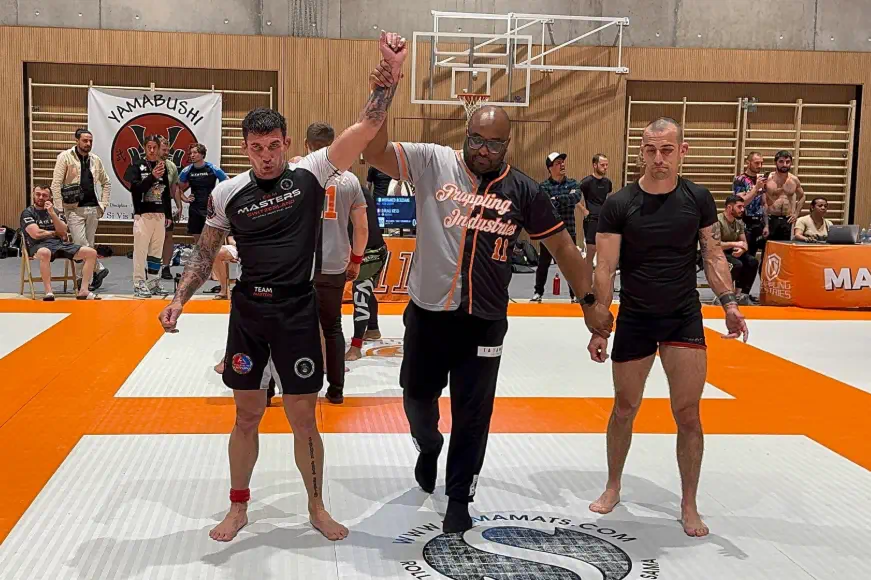
Mixed martial arts combines striking, wrestling, and ground fighting into a single discipline. While a fighter can specialize in one area, the sport consistently rewards well-rounded athletes. Brazilian Jiu-Jitsu (BJJ) is one of the foundational pillars of MMA, and understanding why it matters can help any fighter, from beginner to competitor, build a more complete skill set.
The Ground Is Part of the Fight
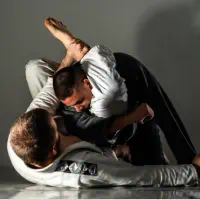
A significant percentage of MMA fights end up on the mat, whether through a takedown, a clinch that turns into a trip, or a scramble after a missed strike. A fighter who has no answer once the fight hits the ground is at a serious disadvantage, regardless of how strong their striking is. BJJ teaches how to control position, escape bad spots, and finish an opponent once on top or from the bottom.
Positional Control Changes Everything
One of the core concepts in BJJ is positional hierarchy: some positions are simply better than others. Learning to move from an inferior position to a dominant one, or to prevent an opponent from doing the same, is a skill that translates directly into cage control and can decide close rounds on the judges' scorecards.
Submissions Add a Finishing Threat
Submission grappling gives a fighter an additional way to end a fight beyond knockouts. Chokes, joint locks, and other BJJ-based submissions have finished countless MMA bouts at every level of competition. Even fighters who prefer to strike benefit from knowing submissions, because opponents must respect that threat, which can open up space for strikes instead.
Defense Matters as Much as Offense
Just as important as attacking with submissions is defending against them. A fighter with solid BJJ fundamentals knows how to recognize a submission attempt early, create the right frames, and escape before it becomes dangerous. Without this knowledge, a single mistake on the ground can end a fight instantly.
Improved Fight IQ and Composure
Training BJJ regularly builds patience and problem-solving under pressure. Rolling live with training partners teaches a fighter to stay calm when pinned, to think several steps ahead, and to conserve energy instead of panicking. This composure carries over into the cage, where staying relaxed in bad positions often makes the difference between recovering and getting finished.
Takedown Defense and Wrestling Synergy
BJJ and wrestling complement each other closely in MMA. While wrestling focuses heavily on takedowns and top control, BJJ adds the technical layer of what to do once the fight is on the ground, whether attacking or defending. Fighters who combine both disciplines tend to have a more complete grappling game than those who train only one.
A Long-Term Skill for Any Level
BJJ is often described as a martial art that rewards technique over pure athleticism, which makes it accessible to fighters of different body types, ages, and experience levels. Amateur competitors and seasoned professionals alike continue refining their ground game throughout their careers, because there is always another detail, sweep, or escape to learn.
Bringing It Into MMA Training
For fighters building a training schedule, BJJ sessions are typically integrated alongside striking, wrestling, and strength conditioning. Many gyms structure weekly training around specific focuses: technical BJJ classes for learning new techniques, and live rolling sessions to test them under resistance. Consistency in both areas is what allows ground skills to become instinctive during an actual fight.
Conclusion
Brazilian Jiu-Jitsu is not an optional add-on for MMA fighters, it is a core component of a complete game plan. From takedown defense to submission offense and the composure needed to stay calm under pressure, BJJ shapes how a fighter performs once the fight leaves the feet. Fighters who invest time on the mat consistently find themselves better prepared for the unpredictable nature of MMA competition.
FAQ
Do MMA fighters really need Brazilian Jiu-Jitsu, or is striking enough?
Striking alone is not enough because a large share of MMA fights end up on the ground. BJJ provides the tools to control position, defend submissions, and finish fights once striking distance is closed. Fighters without ground skills are vulnerable the moment a fight leaves the feet.
How does BJJ help with takedown defense?
BJJ teaches how to manage position immediately after a takedown attempt, including framing, hip movement, and recovering guard. Combined with wrestling, it gives fighters a more complete answer to being taken down. This reduces the risk of getting stuck in a dominant position against them.
Can BJJ help a fighter who prefers to strike?
Yes, because opponents must respect the threat of submissions even if a fighter's main game plan is striking. This can open up space and hesitation that favors the striker. It also protects the fighter if the fight unexpectedly goes to the ground.
Is BJJ only useful for grapplers, or also for wrestlers?
BJJ complements wrestling by adding technical ground skills once a takedown is secured or defended. Wrestlers with BJJ knowledge can convert top control into submissions or better positional dominance. The two disciplines work well together in an MMA context.
How often should an MMA fighter train BJJ?
Training frequency depends on a fighter's overall schedule and level, but BJJ is typically trained multiple times per week alongside striking and conditioning. Consistency matters more than isolated long sessions, since ground skills develop through repetition and live rolling. Many gyms structure separate technical and live-training sessions to build both understanding and instinct.
What are the main benefits of BJJ beyond submissions?
Beyond submissions, BJJ builds positional awareness, composure under pressure, and problem-solving skills during a fight. It also improves takedown defense and overall ground control. These benefits apply to fighters at every experience level, not only advanced grapplers.
Tout est dit, la maîtrise de chaque étape guide vers la victoire
Oss

- Choosing Boxing Gloves as a Beginner: A Practical Guide
- Twins Special Switzerland: Muay Thai Gear Guide
- Wrestling Singlet & Shoes: The Phantom Buying Guide
- Neck Harness Training in Combat Sports: Why a Strong Neck Matters
- Twins Special arrive chez CombatCorner.ch : la légende du Muay Thai enfin disponible en Suisse
- Kids Boxing at Home: The Complete Guide to Junior Punching Bags
- How to Recover After Training in Hot Weather
- Training During a Heatwave: How to Stay Safe and Keep Improving
- Hit N Move® Lands in Switzerland: The World's Most Scientifically Advanced Boxing Brand
- Hayabusa lands at CombatCorner : the world's premium boxing glove benchmark is now available in Switzerland
- Boxing Hand Wraps: The Complete Protection Guide
- Conor McGregor’s comeback shakes the MMA world again
- 2 Jardin-Alpin,
1214 Meyrin
Suisse - +41 22 391 42 19
- Monday-Friday 8:00 - 14:00
- info@combatcorner.ch
- Voir sur la carte
© 2017 - 2026 Molard Web SA. Powered by Nelocom GmbH


This site uses cookies to store information on your computer. See our cookie policy for further details on how to block cookies.
Refuse Accept cookies⚠️ We noticed you declined cookies. Some features may not work properly.
To enjoy full functionality, please consider enabling cookies.


